
TL;DR: What You Need to Know About Odoo 20
- Agentic AI evolves from chatbot responses to autonomous multi-step workflow execution across modules
- Read-replica database architecture targets breaking the 10,000 concurrent user ceiling for enterprise deployments
- Predictive supply chain with AI-driven demand forecasting and smart replenishment could cut lead times by 22%
Every year, the Odoo Experience conference in Brussels reveals the next version of one of the fastest-growing open-source ERP platforms in the world. In September 2026, Odoo 20 is expected to land — and based on the trajectory from versions 17 through 19, this could be the most transformative release yet.
The shift is significant. Over the past three years, Odoo has moved from content-generation AI (v17) to practical utility AI (v18) to a full AI infrastructure layer with agents and natural language search (v19). The logical next step is autonomous AI — agents that don't just respond to commands but plan and execute independently.[1]
What does this mean for your business?
- Reduced coordination overhead — AI handles multi-department status tracking and workflow orchestration
- Enterprise-scale performance — Read-replica architecture eliminates the concurrent user ceiling
- Smarter supply chains — Predictive demand forecasting replaces reactive reorder rules
This guide covers the four biggest predicted features, who benefits most, and the 6 steps to prepare before upgrading.

The Evolution: How Odoo Got Here (v17 → v19 → v20)
Understanding where Odoo 20 is heading requires context. Odoo doesn't ship random features — it follows a deliberate three-year progression of depth over breadth.[2]
AI Integration Timeline
- Version 17 (Oct 2023): Content generation — marketing copy, website text, basic AI suggestions
- Version 18 (Oct 2024): Practical utility — enhanced OCR, automated invoice processing, data cleaning
- Version 19 (Oct 2025): AI infrastructure — AI Agents, "Ask Odoo" natural language search, voice-to-action transcripts
- Version 19.1 (Jan 2026): Building blocks — file-specific AI analysis, context-aware filtering, multi-step task chaining
Performance Scaling Timeline
- Version 17: 2,000–3,000 concurrent users
- Version 18: ~5,000 concurrent users (core engine optimizations)
- Version 19: Framework-level support for scaling beyond 5,000
- Version 20 (predicted): 10,000+ concurrent users via read-replica architecture
This isn't speculation — it's the natural trajectory of a platform that's been systematically closing the gap between open-source ERP and enterprise-grade solutions like SAP and Oracle.
Prediction #1: Agentic AI — From Chatbots to Autonomous Workflows
Odoo 19 introduced AI agents and natural language search, but they still function primarily as reactive chatbots. You ask, they respond. The version 19.1 update already planted the seeds for something bigger:[1]
- AI agents that analyze specific files (not just answer general questions)
- Context-aware filtering (AI understands time periods, departments, data relationships)
- Multi-step task chaining (early foundation for workflow execution)
What Agentic AI Looks Like in Practice
The difference between current Odoo AI and predicted agentic AI is the difference between an intern who needs constant direction and an experienced employee who understands the job:
- Current (v19): You ask AI a question → it answers. You tell it to do one task → it does one task.
- Predicted (v20): AI monitors processes and alerts you proactively. It completes multi-step workflows start to finish. It connects information across departments.
Imagine your purchasing agent AI detecting that a key raw material is running low, checking supplier lead times, comparing prices across three vendors, creating a purchase order draft, and notifying the warehouse — all without a single human click.
Who Benefits Most
- Operations managers spending 10+ hours/week chasing status updates across departments
- Sales teams losing 30–40% of their time to CRM data entry instead of customer conversations
- Finance leaders needing cross-functional insights without dedicated analyst resources
- Growing companies (50–500 employees) where coordination overhead scales faster than revenue
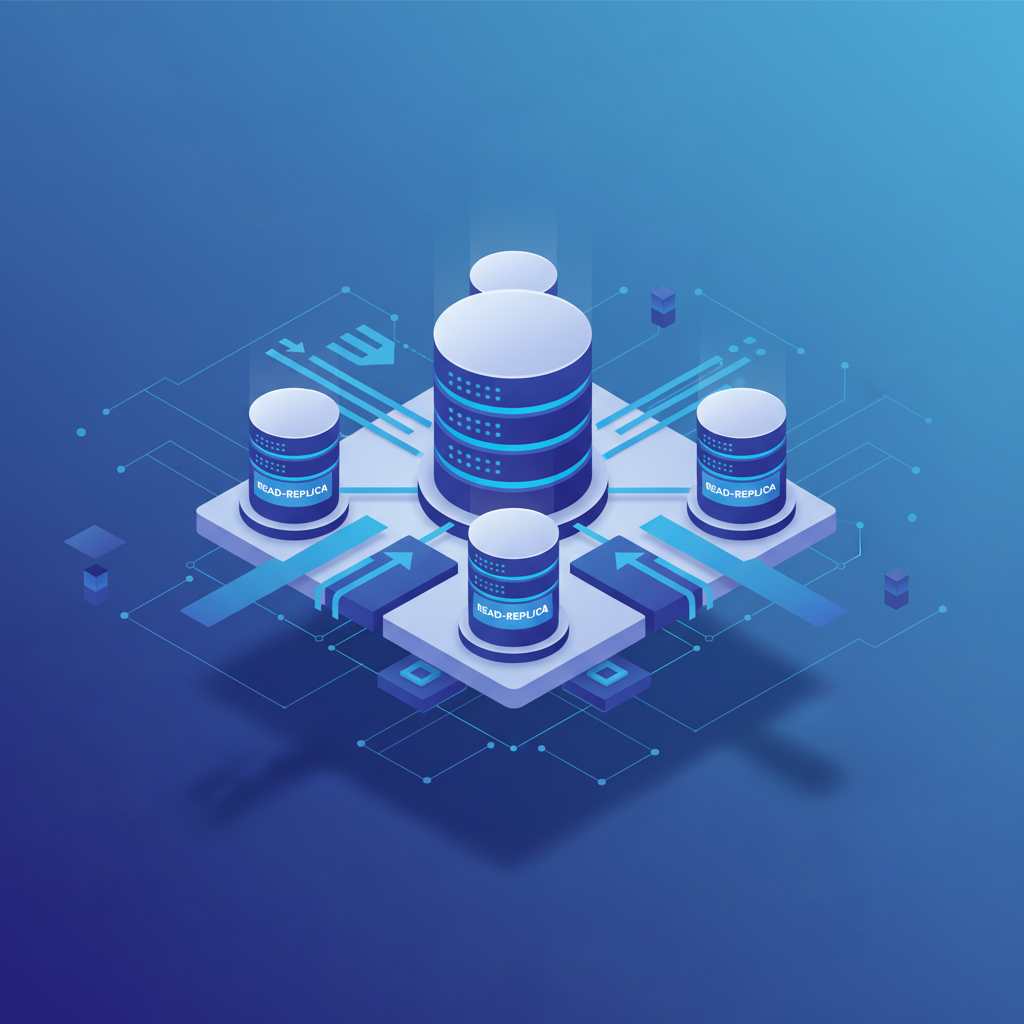
Prediction #2: Read-Replica Database — Breaking the 10,000-User Ceiling
This is the feature that could make Odoo a genuine alternative to SAP and Oracle for large enterprises. Currently, every Odoo query — whether it's a salesperson checking a price or a warehouse worker scanning a barcode — hits the same primary database.
Read-replica architecture separates read operations (reports, dashboards, queries) from write operations (creating orders, updating stock). The result: reporting never slows down production workflows.[1]
Why This Matters
- Manufacturing companies (500+ employees) running concurrent operations across sales, production, and warehouse
- Global organizations operating 24/7 across multiple time zones with zero maintenance windows
- Fast-growing mid-market companies approaching 3,000+ concurrent users and planning for scale
- Retail chains running peak-season campaigns that overwhelm single-database architectures
If Odoo 20 delivers full read-replica support, it removes the single biggest technical barrier preventing enterprise adoption.
Prediction #3: AI Financial Forecasting
Current Odoo accounting is strong for record-keeping. It handles invoicing, reconciliation, and tax compliance effectively. But strategic financial planning — cash flow forecasting, scenario modeling, budget variance prediction — still requires external tools or dedicated analysts.
Based on the AI progression pattern, Odoo 20 could introduce:
- Automated cash flow forecasting — Predicting liquidity gaps weeks in advance based on historical patterns, outstanding invoices, and seasonal trends
- Budget variance alerts — Proactive notifications when spending deviates from plans, not after-the-fact reports
- Scenario modeling — "What happens to margins if raw material costs increase 15%?" answered in real-time from ERP data
- Anomaly detection — Flagging unusual transactions or spending patterns automatically
Key Benefits
- Faster decisions — Strategic financial insights without waiting for monthly reports
- Lower risk — Early warning on cash flow issues before they become crises
- No additional tools — Financial intelligence built into the ERP, not bolted on
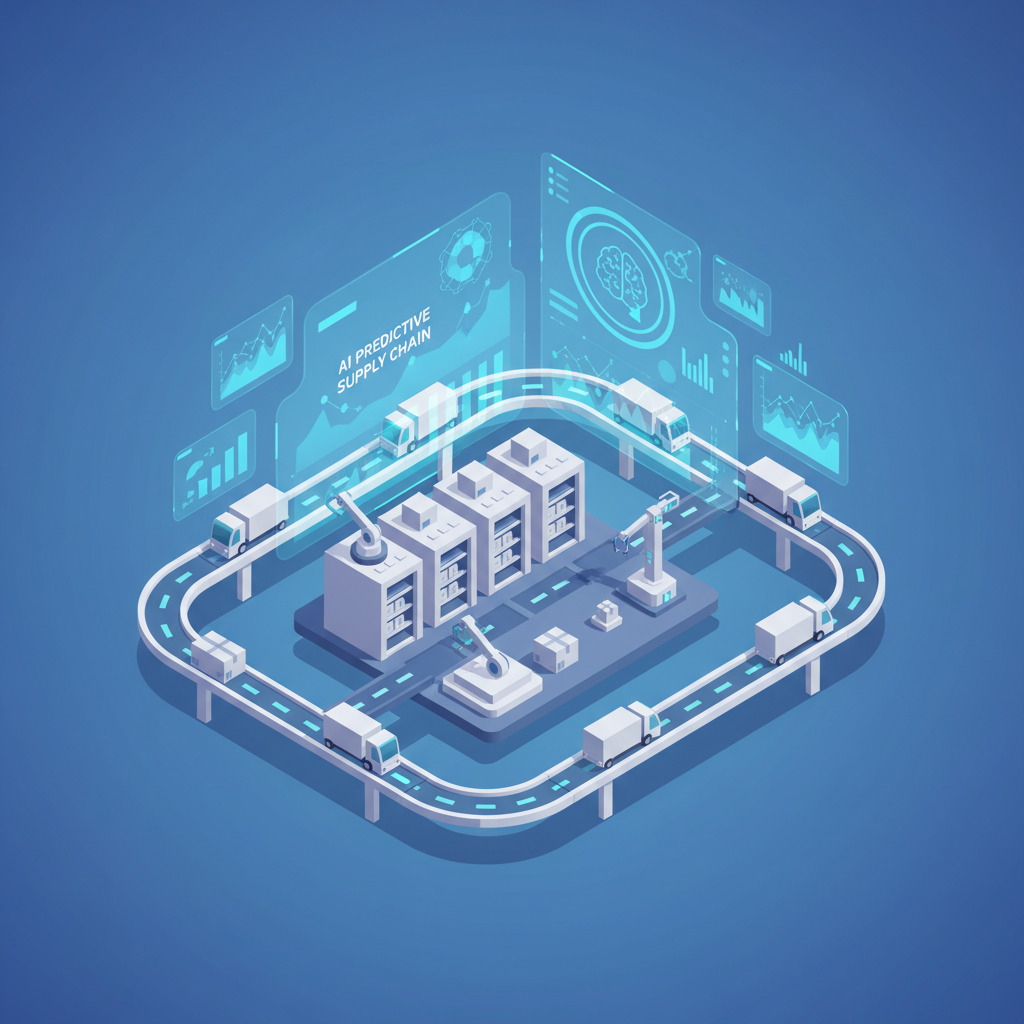
Prediction #4: Predictive Supply Chain and Smart Replenishment
AI-driven demand forecasting isn't just a buzzword — the numbers back it up. Intelligence-infused demand forecasts have been shown to cut lead times by 22%, reduce expedited shipments by 27%, and boost supplier-level accuracy by 35–42%.[3]
Smarter replenishment needs accurate landed costs. See how the Customs Duties add-on automates duties and freight allocation.
Odoo 19 already improved demand forecasting and reorder rules. Odoo 20 could take this further with:
- Dynamic safety stock calculation — AI adjusts buffer inventory based on demand variability, supplier reliability, and seasonal patterns
- Multi-echelon optimization — Coordinating inventory levels across warehouses, distribution centers, and retail locations
- Supplier performance scoring — Automatic supplier ranking based on delivery time, quality metrics, and price competitiveness
- Disruption prediction — Proactive alerts when geopolitical events, weather, or logistics issues threaten supply chains
Key Benefits
- Lower carrying costs — Less money tied up in excess inventory
- Fewer stockouts — AI predicts demand spikes before they happen
- Smarter purchasing — Data-driven vendor selection, not gut feeling
6 Steps to Prepare for the Odoo 20 Upgrade
Whether you plan to upgrade on day one or wait for the first maintenance release, preparation starts now. Here's the roadmap:
1. Assess Your Customization Complexity
Customizations are the #1 upgrade blocker. Catalog every custom module, modified view, and API integration. For each one, determine: Is this still needed? Can it be replaced with native Odoo functionality? What's the migration effort?
2. Clean Your Data
Dirty data migrates poorly. Deduplicate contacts, archive obsolete products, reconcile outstanding transactions. The cleaner your database, the smoother the upgrade.
3. Document Critical Processes
Map your key workflows end-to-end: order-to-cash, procure-to-pay, manufacture-to-ship. This becomes your validation checklist post-upgrade.
4. Plan Your Testing Approach
Never upgrade production directly. Set up a staging environment that mirrors production. Run your documented workflows against it. Have key users from each department validate their processes.
5. Consider a Phased Rollout
For multi-company or multi-site deployments, upgrade one entity first. Learn from the experience before rolling out to others.
6. Budget Appropriately
Upgrades involve more than license costs. Factor in testing time, custom module migration, user retraining, and a contingency buffer for unexpected issues. Typical upgrade projects run 2–4 months for mid-market companies.
Timeline: What to Expect and When
- September 2026: Odoo Experience conference — official Odoo 20 announcement and demo
- October 2026: Initial release and early adoption
- Q1 2027: First maintenance releases (19.x → 20.x migration tools mature)
- Q2 2027: Recommended upgrade window for most businesses (stability proven)
Our recommendation: Start preparation in Q2 2026 (data cleanup, documentation, customization audit). Plan the actual upgrade for Q1 2027 when stability is proven and community migration guides are available.
Summary
Odoo 20, expected in September 2026, is shaping up to be the most significant release in years. Agentic AI promises autonomous multi-step workflows that eliminate coordination overhead. Read-replica database architecture could break the 10,000 concurrent user ceiling, making Odoo a genuine enterprise alternative. Predictive supply chain features leverage AI to cut lead times by 22% and reduce expedited shipments by 27%. Start preparing now: audit customizations, clean your data, and document critical workflows to ensure a smooth upgrade path.
Frequently Asked Questions
When will Odoo 20 be released?
Odoo 20 is expected to be announced at the Odoo Experience conference in September 2026, following Odoo's consistent annual release pattern. The initial release typically arrives shortly after the conference, with stabilization maintenance updates following in Q1 2027.
What is agentic AI in Odoo 20?
Agentic AI refers to AI that can autonomously plan and execute multi-step workflows without constant human direction. Unlike the current chatbot-style AI in Odoo 19, agentic AI in Odoo 20 is predicted to monitor processes proactively, connect information across departments (inventory, finance, manufacturing), and complete end-to-end workflows like purchase order creation based on inventory levels and supplier analysis.
How many concurrent users can Odoo 20 support?
With the predicted read-replica database architecture, Odoo 20 could support 10,000+ concurrent users. Previous versions topped out around 2,000–3,000 (v17), 5,000 (v18), and beyond 5,000 with framework optimizations (v19). Read-replica separates read and write operations, eliminating the bottleneck where reports slow down production workflows.
Should I upgrade to Odoo 20 immediately on release?
For most businesses, we recommend waiting until Q1 2027 when the first maintenance releases stabilize the platform and community migration guides are available. Use the time between now and September 2026 to prepare: audit customizations, clean data, document workflows, and plan testing. Early adopters should only upgrade in staging environments first.
How do I prepare for the Odoo 20 upgrade?
Start with six steps: (1) Assess customization complexity and identify migration blockers, (2) Clean your data — deduplicate, archive, reconcile, (3) Document critical business processes end-to-end, (4) Set up a staging environment for testing, (5) Plan a phased rollout for multi-site deployments, (6) Budget for testing, migration, and retraining. Start in Q2 2026 to be ready for a Q1 2027 upgrade.
Get Ready for Odoo 20 with the Right Add-Ons
Odoo Skillz develops production-ready Odoo add-ons that extend ERP capabilities for manufacturing, inventory, and POS workflows. Stay ahead of the curve — our modules are built with forward compatibility in mind.
References
- VTI — "Odoo 20 Forecast: Agentic AI, Read-Replica, & Enterprise-Level Module" (2026). https://vti.com.vn/odoo-20-predictions
- Aspire Softserv — "What to Expect from Odoo 20: New Features, Industry Benefits & Updates" (2026). https://dev.to/aspire-softserv/what-to-expect-from-odoo-20-new-features-industry-benefits-updates-3jbi
- Master of Code — "150+ AI Agent Statistics [2026]" (2026). https://masterofcode.com/blog/ai-agent-statistics
- Nasscom — "How Odoo ERP Development Solves Production Scheduling Challenges in Manufacturing" (2026). https://community.nasscom.in/communities/mobile-web-development/how-odoo-erp-development-solves-production-scheduling-challenges
- The Access Group — "Best Warehouse Management Systems for Small Business in 2026" (2026). https://www.theaccessgroup.com/en-au/blog/erp-best-warehouse-management-systems-for-small-business-in-2026/